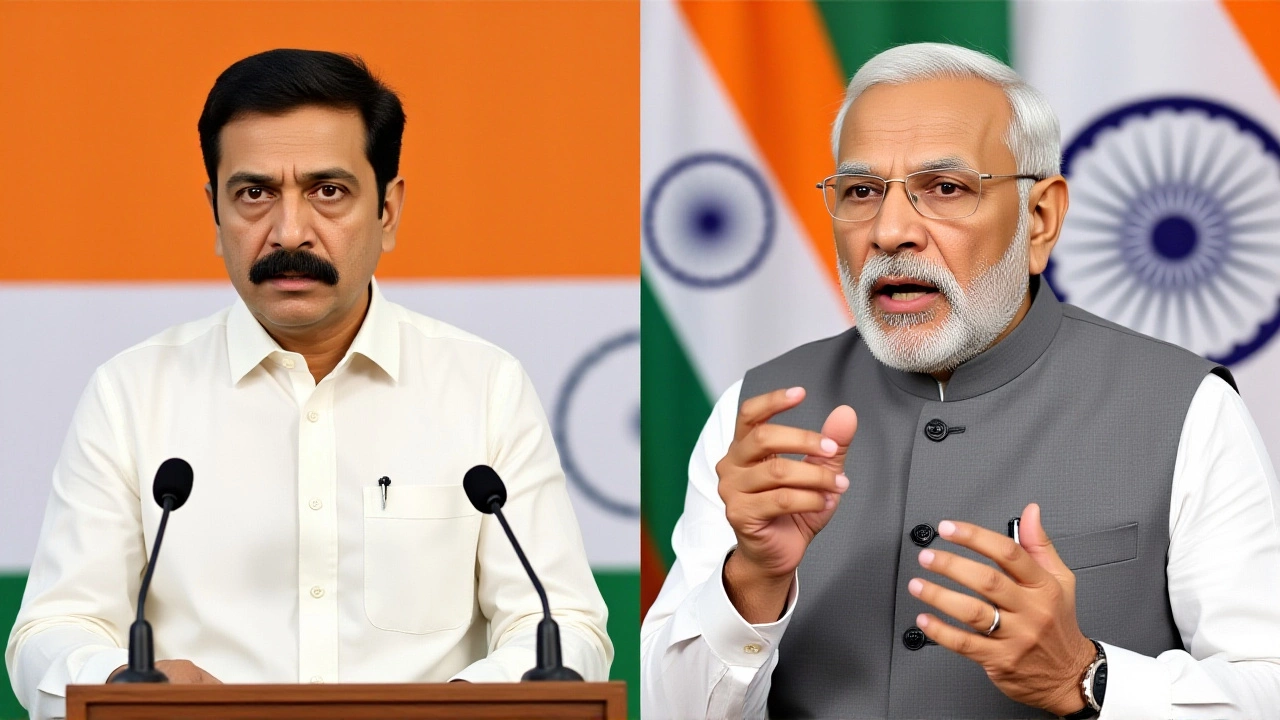
When Rahul Gandhi, senior leader of the Indian National Congress, took to social media on Monday, May 25, he didn’t mince words. He accused the central government of quietly picking the pockets of ordinary citizens through incremental hikes in petrol and diesel prices. The attack was personal, direct, and framed around a recurring political narrative: that Prime Minister Narendra Modi is personally responsible for the rising cost of living.
The criticism emerged from New Delhi, where fuel prices had just ticked upward again. It’s not the first time this has happened, nor is it the first time the opposition has seized on it. But there’s something specific about how Gandhi phrased his complaint this time—suggesting a strategy rather than a mistake. He claimed the government was raising prices "in instalments," a method designed to avoid public outrage while steadily draining household budgets.
The 'Inflation Man' Narrative Returns
Gandhi used a Hindi phrase that has become shorthand for the Congress party’s economic critique: “महंगाई मानव मोदी” (Mahaghai Manav Modi), which translates roughly to “Inflation Man Modi.” It’s a label meant to personify inflation, pinning the blame squarely on Narendra Modi, Prime Minister of India. According to reports from Navjivan India and ThePrint Hindi, Gandhi argued that this latest hike was part of a pattern—a repeated assault on the public.
Here’s the thing: fuel pricing in India isn’t set by a single switch flip. It’s influenced by global crude oil prices, exchange rates, state taxes, and central excise duties. But the political framing simplifies this complexity. By calling out the "instalment" approach, Gandhi suggested that the government prefers small, frequent increases over one large, visible jump. Why? Because smaller hikes fly under the radar. They don’t trigger immediate protests or headline-grabbing anger. Over time, though, they add up.
ThePrint Hindi cited a broader Congress statement accusing Modi of making promises during election campaigns and then delivering hardship in between. That’s a familiar charge in Indian politics—one that echoes debates from previous general elections. But this time, the focus is sharply on fuel. And fuel matters because it touches everything: transport costs, food logistics, daily commutes.
Why Incremental Hikes Matter More Than You Think
Let’s break down why the "instalment" argument carries weight. Imagine your rent goes up by ₹100 every month instead of ₹1,200 all at once. Individually, each increase feels manageable. Collectively, it’s a significant burden. That’s essentially what Gandhi is describing with petrol and diesel prices.
Fuel price adjustments in India are dynamic. Unlike some countries where prices are fixed for months, Indian pump prices can change weekly—or even daily—based on international markets and tax policies. This flexibility allows the government to adjust revenue streams without announcing major policy shifts. For consumers, however, it creates uncertainty. You never quite know if tomorrow’s fill-up will cost more.
Data from recent months shows multiple small increases across major cities. While exact figures vary by location due to differing state VAT structures, the trend is clear: prices have been creeping upward. In Mumbai, for instance, petrol crossed the ₹100 per litre mark several times in the past year before dipping slightly and rising again. Diesel followed a similar trajectory. These fluctuations aren’t anomalies—they’re features of the current pricing model.
Opposition Strategy vs. Government Silence
So far, the Bharatiya Janata Party (BJP) hasn’t offered a detailed rebuttal to Gandhi’s claims. Instead, officials have pointed to global factors beyond their control. Crude oil prices remain volatile, impacted by geopolitical tensions in the Middle East and production decisions by OPEC+ nations. Exchange rate fluctuations also play a role; when the rupee weakens against the dollar, importing oil becomes more expensive.
But here’s the twist: silence can be interpreted as admission. Or at least, indifference. For the opposition, that lack of engagement strengthens their narrative. If the government won’t explain why prices keep rising, voters might assume there’s no good reason—and therefore, someone is benefiting.
Political analysts note that fuel prices are always sensitive ahead of elections. With state assembly polls looming in key states like Maharashtra and Madhya Pradesh, any spike in living costs could sway voter sentiment. The Congress party knows this. Their messaging aims to keep inflation top-of-mind long before ballots are cast.
What Comes Next for Fuel Prices?
Looking ahead, experts suggest we’ll see continued volatility. Global supply chains are still recovering from pandemic disruptions and ongoing conflicts. Meanwhile, domestic demand in India remains robust, driven by population growth and urbanization. Both factors push prices upward.
There’s also the question of subsidies. Some states offer partial relief through reduced VAT rates, but these measures are often temporary and fiscally strained. A permanent solution would require structural reforms—perhaps stabilizing tax components or hedging strategies for crude imports. Neither option is politically easy.
For now, the debate rages on. Rahul Gandhi’s accusation may not change tomorrow’s pump price, but it shapes how people perceive the government’s handling of the economy. Perception, after all, drives politics. And in India, nothing fuels political fire quite like the cost of getting around.
Frequently Asked Questions
Who is Rahul Gandhi and why does his opinion matter?
Rahul Gandhi is a senior leader of the Indian National Congress, the main opposition party in India. As a former Member of Parliament and son of former Prime Minister Rajiv Gandhi, he holds significant influence within the party. His statements often set the tone for the Congress’s national agenda, especially regarding economic issues affecting everyday citizens.
What does 'Inflation Man Modi' mean?
The term 'Inflation Man Modi' (महंगाई मानव मोदी) is a political epithet coined by the Congress party to criticize Prime Minister Narendra Modi. It suggests that he bears primary responsibility for rising inflation rates and increased costs of essential goods, including fuel. The label aims to personalize economic grievances and hold the executive accountable for macroeconomic conditions.
Are fuel prices really being raised in 'instalments'?
While the government doesn't officially describe its policy as 'instalment-based,' data shows that petrol and diesel prices in India frequently undergo small, incremental adjustments rather than large, infrequent changes. This approach allows for responsiveness to market fluctuations but can result in cumulative increases that feel gradual yet substantial to consumers over time.
How do global events affect local fuel prices in India?
India imports nearly 85% of its crude oil needs, making domestic fuel prices highly sensitive to international markets. Geopolitical conflicts, such as those in Ukraine or the Middle East, can disrupt supply and drive up global crude prices. Additionally, currency exchange rates impact import costs; a weaker rupee means higher expenses for buying foreign oil, which eventually gets passed on to consumers at the pump.
Will fuel prices drop soon?
Predicting short-term fuel price movements is difficult due to multiple variables. However, unless global crude prices fall significantly or the Indian rupee strengthens considerably, sustained decreases are unlikely. Governments may temporarily reduce taxes to provide relief, but structural factors continue to exert upward pressure on retail fuel costs across most Indian states.